Desert Diamonds: What Are They? And Why Are They All the Rage?

Your engagement ring should reflect your unique individuality. Consider the quiet luxury and grounded elegance of the “desert diamond.” Shaped by time, these warm, sandy-toned diamonds have fast become a favorite of personal expression for brides-to-be.
Rare and beautiful, the desert diamond is an alternative to the traditional white diamond that might capture your love story in just the right light.
What are Desert Diamonds?
Desert diamonds are natural diamonds formed deep within the earth. These geological masterpieces range in hues from soft cream and golden honey to rich amber and deep bronze. Also known as champagne diamonds, the warm tones reflect every shade of color found in sun-drenched desert landscapes.
You have questions. We have answers.
Are desert diamonds real diamonds? Yes. They are completely natural diamonds and are part of the diamond family.
Are desert diamonds lab-grown or man-made? Desert diamonds can be made in a lab, yet the ones we source are hand-selected, all-natural stones shaped by time over billions of years.
Are desert diamonds the same thing as champagne diamonds? Yes, the phrase “desert diamond” is a modern expression of a stone that has historically been known as a champagne diamond in fine jewelry circles.
What makes Desert Diamonds so special?
1) A twist of color
Just like the colorless classic, desert diamonds are formed deep beneath the Earth’s surface under intense pressure and extreme heat. Yet, trace minerals like nitrogen and unique structural elements shape and color desert diamonds as if the Earth has put its signature stamp on the natural beauty of each one. The result? A softer, more natural palette that’s both modern and timeless.

2) As versatile as they are beautiful
Desert diamonds pair beautifully with all sorts of settings. Picture one of these earthy gemstones set in yellow gold for a warm-on-warm glow. Mix white gold or platinum with a chocolate diamond for eye-catching contrast. Or better yet, mix up diamond colors in one unique setting from creamy champagne to whiskey brown for an even more creative expression of your love.

3) Better value potential
If you’re wondering “are desert diamonds expensive?” The answer is that they’re often less expensive than white diamonds of a similar cut and size. Their natural color typically makes them more approachable and wallet-friendly.
4) As individual as you are
No two desert diamonds are exactly alike. Subtle variations in tone make these one-of-a-kind gemstones a must-have for the big question. Explore our Champagne Collection to find a gem that illustrates your love story best.
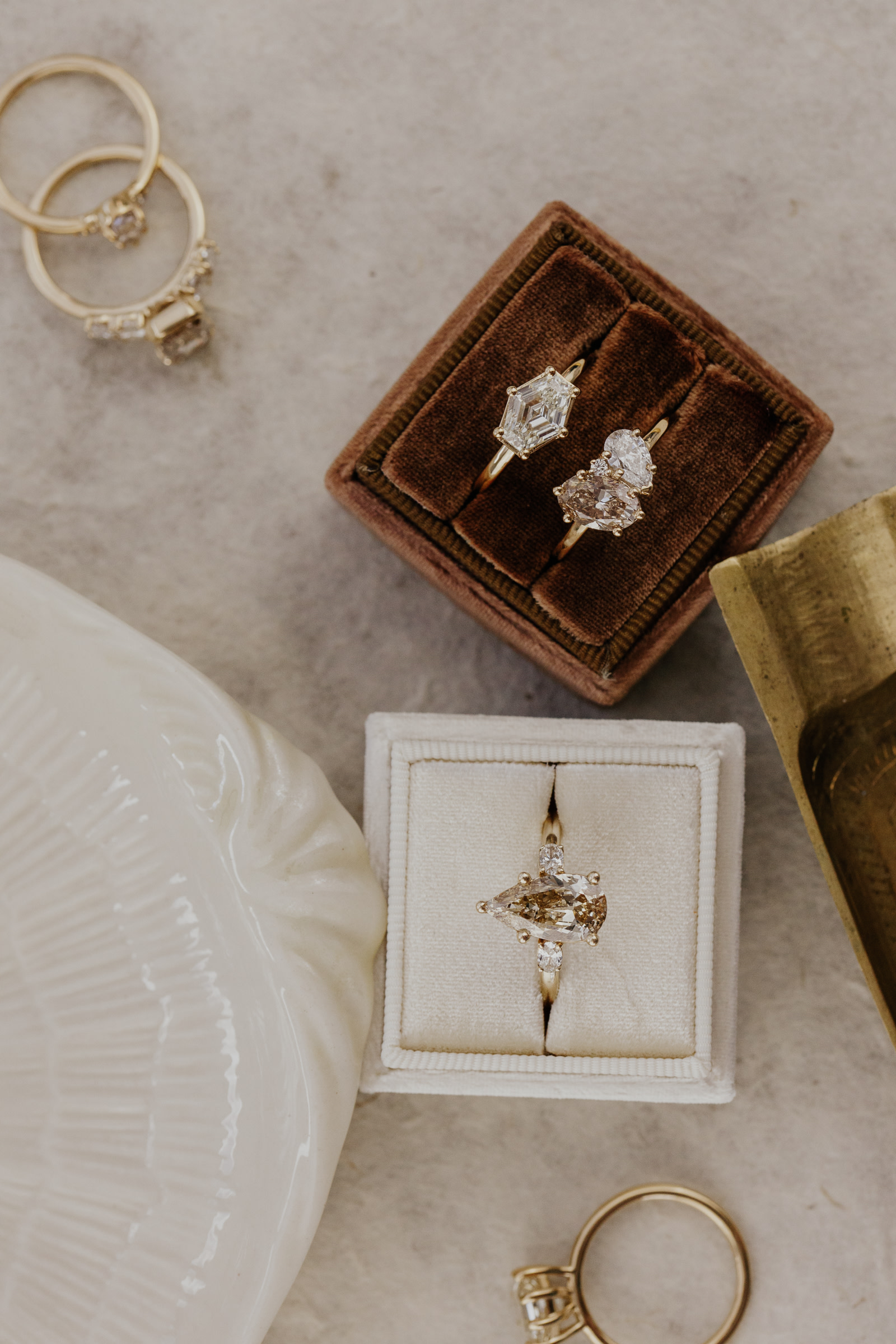
Types of Desert Diamonds
There’s an expansive color range to desert diamonds from soft yellows to dark cognac browns. With endless variations in shape, color and settings, you can customize a truly original design with one of these incredible stones.
Shapes of Desert Diamonds
- Oval
- Cushion
- Pear
- Round
Each cut reflects the diamond’s color and light. No matter which shape you gravitate towards, desert diamonds glow with warmth and depth that’s reminiscent of the desert itself.

Colors that captivate
Desert diamonds delight with a color palette only Mother Nature could create. Beautiful hues fall into the lighter end of the color scale with sunlit and champagne tones. Mid-range shades include honey and caramels, while the dark end of the color spectrum features cognac and mocha tinted diamonds.
Find a setting that speaks to you
From minimalist solitaires to intricate vintage-inspired designs, desert diamonds adapt beautifully to any aesthetic.

How do Desert Diamonds form?
Shaped by time and the forces of nature, desert diamonds form the same way all natural diamonds do. In the mantle below the crust, extreme heat and pressure cause carbon atoms to bond into crystalline structures over billions of years. Kimberlite pipe eruptions then carry many of these natural stones towards the Earth’s surface for discovery. Each gemstone is unique due to its exposure to nitrogen and structural variations in the stone that give desert diamonds their signature warm tones.
Common questions that come up:
Where do our desert diamonds come from? Committed to sourcing conflict-free diamonds as part of the Kimberley Process initiative, we source from regions known to ethically mine colored diamonds like Australia and Africa.
Where are desert diamonds found? Primarily in natural diamond mines not deserts, despite the illustrious name.
Choosing a Desert Diamond
When considering a desert diamond, factor in things like symbolism, your individuality and this gem’s intrinsic tie to nature through color.
Color Preference
Do you love a subtle hint of warmth, or a bold, rich brown tone? This is the biggest driver of a desert diamond’s look.
Cut & Shape
Brilliant cuts (like oval or cushion) enhance warmth and brilliance, while step cuts (like emerald) create a more understated glow.
Carat & Size
Because desert diamonds can be more accessible from a price point, you can choose a larger stone without dramatically increasing your budget.
Setting Style
Think about your overall aesthetic from day-to-day details to special moments out in the world:
Discover a piece from our Champagne Collection that speaks to you. Find yours

Desert Diamonds vs. Champagne Diamonds
Technically, there’s no difference between desert diamonds and champagne diamonds. “Desert diamond” is simply a modern, trend-forward term used to describe the same stone.
So whether you’re looking to answer the question, “where can I buy desert diamonds or champagne diamonds?” your query will pull up the same beautiful, warm-toned natural diamonds to shop.
Desert Diamonds FAQs
Are desert diamonds valuable?
Yes. Like all diamonds, their value depends on the 4 Cs—cut, color, clarity and carat. Their unique color is trending, which can make them more in demand. Learn more about the 4 Cs in our Diamond Guide.
Are desert diamonds worth anything?
Absolutely. They’re genuine diamonds and hold real market value.
How much are desert diamonds?
Prices vary widely depending on size and quality, but they’re often more affordable than comparable natural white diamonds.
Are desert diamonds man-made?
No. Natural desert diamonds are formed beneath the Earth. (Lab-grown versions exist but are labeled as such.)
What do desert diamonds look like?
They sparkle from soft beige and champagne hues to deep brown and cognac tones.
Can I mix desert diamonds with white diamonds?
Yes! This is one of our favorite styling choices. Pair a champagne center stone with white diamond side stones or a white diamond band for contrast, dimension and modern appeal.
Where can I buy desert diamonds?
You can shop desert diamond jewelry through curated fine jewelry designers like Sarah O. Jewelry, especially within our latest drop from the Champagne Collection.
How to polish desert diamonds?
Like all fine diamonds, they should be professionally cleaned or gently maintained at home with mild soap, water and a soft brush.
Are Desert Diamonds right for you?
If you’re drawn to rarity, symbolism and a diamond unlike anything on earth, desert diamonds can mark life’s greatest moments with meaning.
Explore our Champagne Collection to find your perfect desert diamond statement piece. Or create a custom design with one of our diamond experts. Learn more about the custom process or schedule a in-store or virtual appointment.
Because your engagement ring should feel as individual as your story.
Check out more diamond and engagement ring tips on the Sarah O. blog.
Featuring stunning champagne natural diamonds in a range of colors and shapes